Change

5G home internet vs. fiber: Which is right for me?

Annie Eyre
Oct 14, 2026

When choosing a home internet connection, consider factors like speed, reliability, price, and how your household uses the internet. Two popular options are 5G home internet and fiber-optic internet. Both support everyday activities like streaming, browsing, and video calls, but they deliver connectivity differently.

So, is 5G home internet better than fiber? The answer depends on your needs. 

5G home internet offers a wireless connection that can be convenient in areas with strong cellular coverage. Fiber, on the other hand, provides a wired connection designed for fast speeds, responsive performance, and strong upload capabilities.

To choose the right internet service for your home, it helps to understand how each technology works and performs.

What is the difference between 5G home internet and fiber?

The main difference between 5G home internet vs. fiber is how internet service reaches your home. 5G home internet uses cellular signals transmitted wirelessly from nearby towers, while fiber internet uses fiber-optic cables to carry data to your home.

What is 5G home internet?

5G home internet uses fifth-generation cellular technology to connect your household to the internet. A compatible gateway or router receives signals from a nearby cellular tower and distributes the connection to your devices over Wi-Fi.

Because it relies on wireless cellular coverage rather than a dedicated wired connection to the home, 5G internet can be a practical option for people who want a home internet service without traditional cable or fiber wiring.

However, performance depends on several factors, including signal strength, network congestion, distance to a cellular tower, and your home's building materials. Speeds can vary throughout the day and between locations.

What is fiber internet?

Fiber internet uses fiber-optic cables that transmit information as pulses of light. This technology supports high bandwidth, fast data transfer, and low latency, making it well suited to households with demanding internet needs.

With Frontier Fiber Internet, customers can choose from speed tiers designed for different households, including options for everyday browsing, multiple simultaneous streams, gaming, and remote work. Fiber plans also offer symmetrical upload and download speeds, so uploading files can be just as fast as downloading them.

How do 5G and fiber compare?

Feature
5G home internet
Fiber internet
Connection type
Wireless cellular signal
Fiber-optic cable
Speed consistency
Can vary with signal and network congestion
Generally consistent, subject to network and home conditions
Upload speeds
Vary by provider and network conditions
Often match download speeds
Latency
Varies with signal and network conditions
Typically low
Installation
Often straightforward, with a compatible gateway
May require a fiber installation
Availability
Depends on cellular coverage
Depends on fiber network coverage

How do 5G home internet and fiber perform for everyday activities?

The best connection for your household depends on what you do online and how many people use the internet at once.

Streaming movies and TV

Both 5G home internet and fiber can support streaming, including high-definition video and, where speeds permit, 4K content. The difference becomes more noticeable when several people stream simultaneously.

For example, one person might watch a movie while another streams a live sporting event and someone else watches videos on a tablet. A connection with sufficient bandwidth and consistent performance can help keep everything running smoothly.

5G may handle these activities comfortably when coverage and available capacity are strong. Fiber can offer additional headroom for households with multiple high-resolution streams and other internet activity happening at the same time.

Online gaming

Gaming requires more than fast downloads. Latency, or the time it takes data to travel between your device and a game server, affects how quickly the game responds to your actions. A stable connection also helps reduce interruptions during online matches.

5G home internet can support online gaming, but latency may fluctuate with cellular conditions and network congestion. Fiber typically offers low latency and consistent performance, making it a strong option for competitive gaming, cloud gaming, and households where several people play online.

Working from home

Remote work can involve video meetings, virtual private networks (VPNs), cloud applications, document sharing, and large file transfers. These tasks require reliable connectivity in both directions.

5G home internet may be sufficient for everyday remote work, particularly for households with good cellular reception and moderate internet demands. However, uploading presentations, backing up files, or participating in video calls while other household members are online can put additional pressure on a connection.

Fiber's fast upload speeds can make these tasks easier to manage. For people who regularly work with large files or depend on video conferencing throughout the day, symmetrical speeds are especially useful.

Multiple users and connected devices

A household with several people online at once needs enough capacity to handle overlapping activities. Streaming, gaming, video calls, and downloads can compete for available bandwidth.

Both technologies can connect multiple devices, but actual performance depends on the plan, network conditions, and home Wi-Fi setup. Fiber's high-capacity speed options may help busy households avoid one person's activity affecting everyone else's experience.

Smart TVs, security cameras, smart speakers, connected appliances, and other smart-home products also contribute to network demand. If your household has many connected devices, consider both your current usage and how much it may grow.

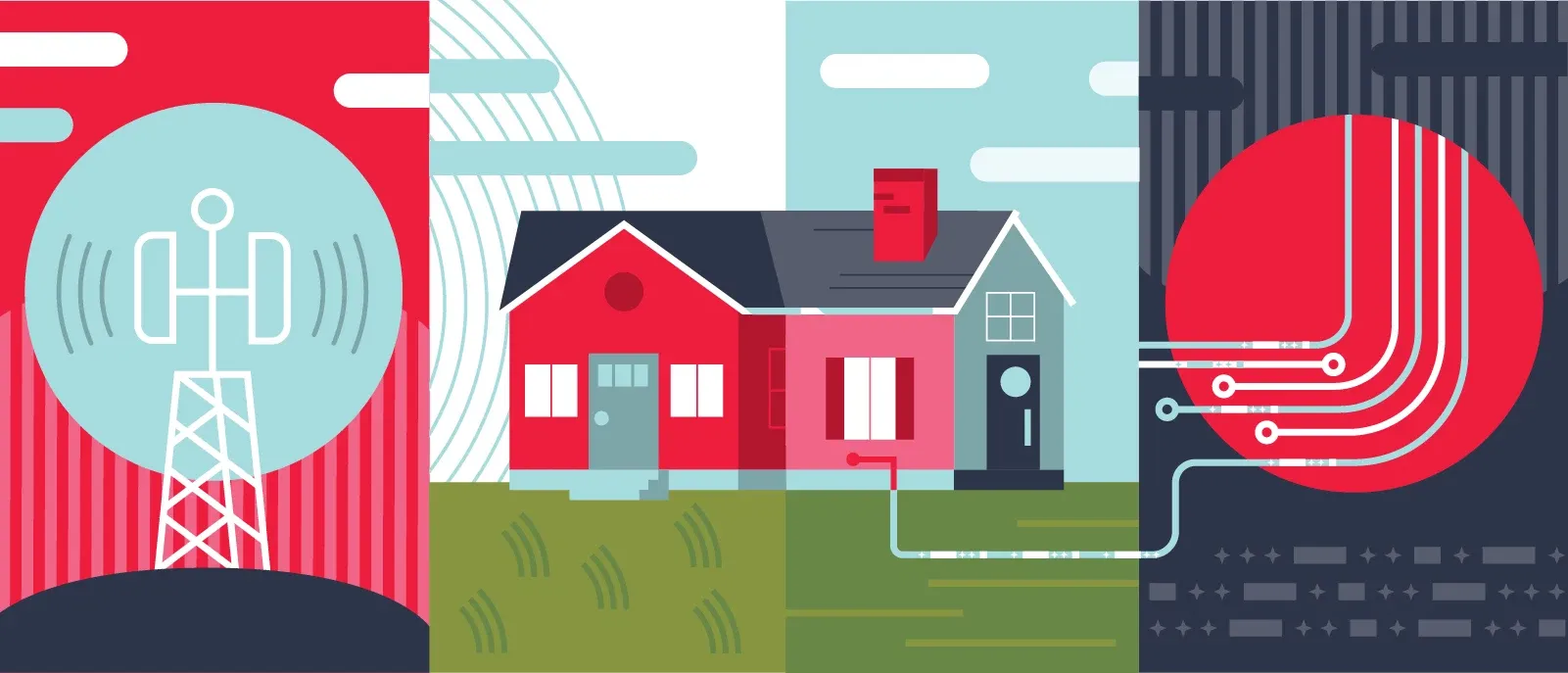
A couple smiling while looking at a laptop together, set against a graphic background featuring a 5G cell tower icon and fiber optic network lines.

Which is right for you: 5G home internet or fiber?

Neither technology is the right choice for every household. The better option depends on your location, budget, available plans, and performance expectations.

wifi icon

When 5G home internet may be the right choice

5G home internet may be a good fit if you:
  • Want a wireless home internet option.
  • Primarily browse websites, check email, and use social media.
  • Stream video and participate in occasional video calls.
  • Have strong 5G coverage at home.
  • Don't have access to fiber internet.
  • Have moderate internet needs and are comfortable with speeds that can vary.

For these households, 5G can provide a convenient way to get online without requiring a fiber connection to the home. Before choosing a plan, check the provider's coverage and consider how performance may change during busy periods.

Fiber Icon

When fiber internet may be the better fit

Fiber may be a better fit if your household:
  • Has multiple people using the internet simultaneously.
  • Relies on video calls and cloud applications for remote work.
  • Regularly plays online or competitive games.
  • Streams 4K content across multiple screens.
  • Uploads large files, creates digital content, or maintains cloud backups.
  • Uses numerous smart-home devices.
  • Prioritizes consistent performance and low latency.
  • Wants fast upload speeds as well as fast downloads.

Fiber is particularly valuable when several activities place demands on the connection at once. Its symmetrical speeds can also support tasks often overlooked when comparing internet plans, such as uploading work files, sharing videos, and backing up photos.

Before making a decision, compare the plans available at your address. A well-performing 5G service may meet your needs, while fiber may offer more capacity and consistency for a household with heavier internet usage.

Why consider Frontier Fiber?

If you decide fiber is the right fit for your home, Frontier Fiber Internet offers speed options for a range of household needs. Its fiber-optic connection, symmetrical speeds, and included Wi-Fi equipment can help support everything from everyday browsing to demanding connected homes.

With a Frontier Fiber Internet plan, you get the following benefits:

  • 100% fiber-optic connectivity
  • Symmetrical upload and download speeds
  • Fiber internet speeds ranging from 500 Mbps to up to 5 Gig
  • No data caps
  • Wi-Fi equipment included
Ready to explore your options?

Learn more about Frontier Fiber Internet to compare speed tiers and find a plan that fits your household. You can also explore Frontier bundles to learn about available add-on services and savings.

5G home internet vs. fiber FAQs